Japan faces a huge challenge with its aging population. Over 29% of people are now 65 or older, and that number keeps climbing. This creates a real need for skilled caregivers, especially from abroad. The Caregiver Training Program offers a clear path for foreign workers to enter this field. It ties into programs like the Technical Intern Training Program (TITP) and Specified Skilled Worker (SSW) visas. These options let you build a solid career in Japan’s respected healthcare system. Unlike basic jobs, caregiving here means steady work and real growth. You can make a difference while securing your future.
Section 1: Understanding the Japanese Caregiving Landscape and Demand
Japan’s Super-Aging Society: The Urgent Need for Foreign Talent
Japan’s population is getting older fast. By 2025, experts predict a shortage of about 550,000 caregivers. Local workers just can’t fill all the spots due to low birth rates and more people retiring. Foreign talent steps in to bridge this gap. Programs like the caregiver training in Japan welcome applicants from countries such as Vietnam, the Philippines, and Indonesia. You could be part of this solution, helping elderly folks live better lives.
This demand isn’t going away. Government reports show care needs will double by 2040. As a foreign caregiver, you’ll find stable jobs waiting. It’s a chance to contribute to a society that values respect for seniors.
Types of Care Settings: Where Caregivers Work in Japan
Caregivers in Japan work in different places, each with its own daily tasks. Nursing homes, called Kaigo Rōjin Hōmu, house many elderly residents. Here, you handle daily routines like meals and meds.
Day service centers, or Dei Sābisu Sentā, offer daytime care for those living at home. You might lead activities or provide light exercise support. Home care, known as Takken-kai, means visiting clients in their houses. Tasks include cleaning, cooking, and companionship.
No matter the setting, the work focuses on safety and comfort. You adapt to the environment while building trust with patients.
Compensation and Career Progression in Japanese Care Work
Entry-level pay for caregivers starts around 200,000 yen per month, above the national minimum wage of about 1,000 yen per hour. With overtime, that can rise quickly. Benefits often include health insurance and paid leave.
Career steps lead to better roles. After a few years, you can aim for the Kaigo Fukushi Shi certification. This boosts your salary by 20-30% and opens supervisory positions. Many workers move up to team leads or trainers.
Long-term, it’s rewarding. You gain skills that transfer worldwide, but Japan’s system offers the most stability.
Section 2: The Structure and Requirements of the Caregiver Training Program
Eligibility Criteria for International Applicants
To join Japan’s caregiver training program, you need to meet basic rules. Most programs require you to be 18 to 35 years old. A high school diploma or equivalent proves your education level.
Sponsorship from a Japanese agency is key. This covers your visa, like TITP for training or SSW for skilled work. Health checks and a clean background are musts. Countries with agreements, such as Indonesia or Nepal, get priority.
These steps ensure you’re ready for the job. Check with your local embassy for exact fits.
Language Proficiency: Navigating the JLPT Requirement
Japanese language skills are crucial for caregiver roles. Most programs demand JLPT N4 level to start, with N3 preferred for better communication. This test checks reading, listening, and basic grammar.
Aim for N4 in 6-12 months with daily practice. Use apps like Duolingo or free YouTube lessons focused on care terms. Join online groups for conversation practice.
Why bother? Clear talk prevents mistakes in daily care. It also helps you connect with patients on a personal level.
The Training Pathway: From Home Country Preparation to On-the-Job Training
The process starts in your home country with classroom sessions. You learn basics like hygiene and simple Japanese phrases over 3-6 months. This builds a strong base before travel.
Once in Japan, you enter technical training for 6 months to a year. Here, you practice hands-on skills in real facilities. Supervisors guide you closely.
Then, shift to a work visa like SSW. This lets you take full-time jobs with pay. The whole path takes 1-2 years, leading to independence.
Section 3: Core Curriculum and Skill Acquisition in Care Training
Mastering Fundamental Care Techniques (Physical Assistance)
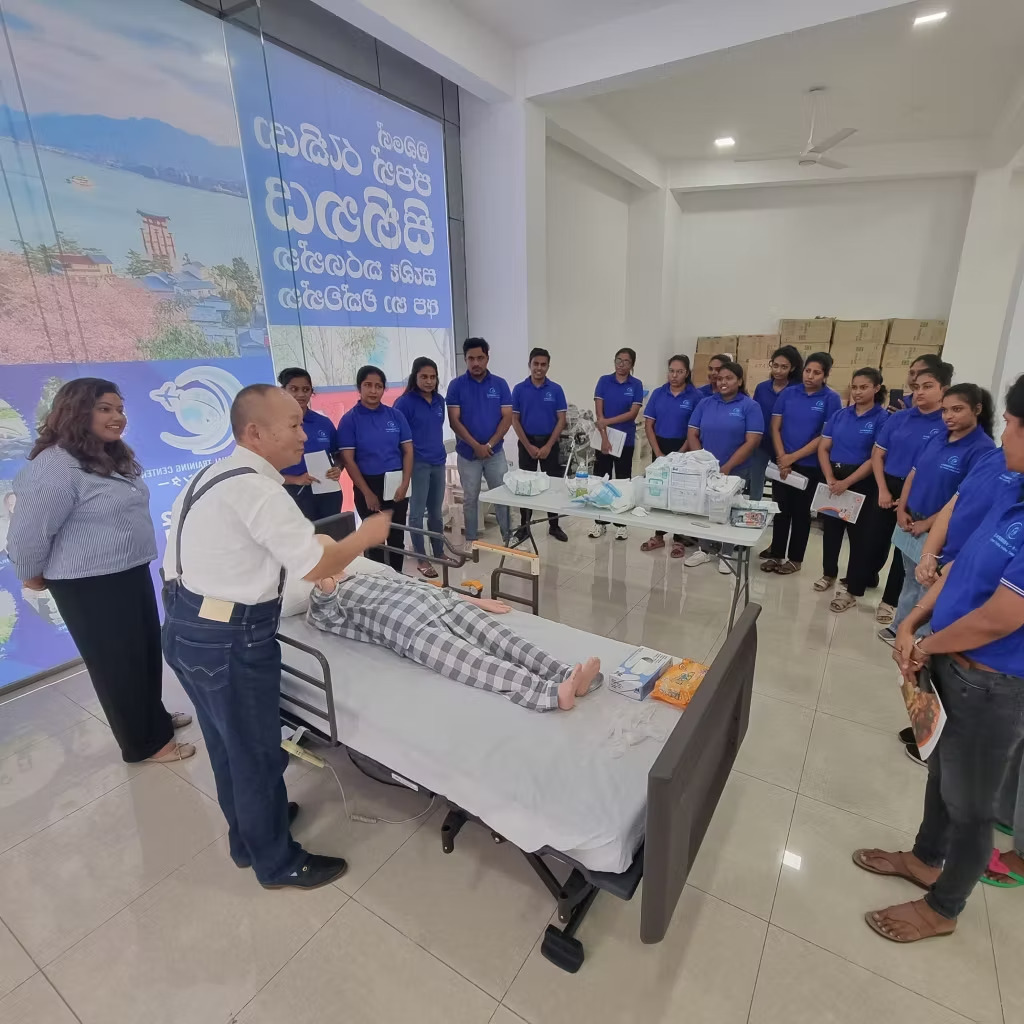
Training covers key moves for physical help. Safe lifting techniques prevent injuries for you and patients. You practice transfers from bed to wheelchair using proper body mechanics.
Bathing assistance follows strict steps to respect privacy. Mobility support includes walking aids and fall prevention exercises. Japanese modules, like those from the Ministry of Health, standardize these skills.
Hands-on drills make it stick. You’ll role-play scenarios to build confidence fast.
Holistic Care: Mental Support and Cultural Competency
Care goes beyond the body. You learn to spot signs of loneliness or stress in elders. Empathy training teaches active listening and gentle encouragement.
Understand Japanese ways, like bowing to show respect or sharing quiet meals. These customs build trust quickly. Programs include role-plays on family dynamics in Japan.
This side of training makes you stand out. Patients feel seen, which improves their mood and your job satisfaction.
Regulatory Compliance and Safety Standards in Japanese Healthcare
Japan’s rules keep care safe and legal. You study infection control, like handwashing protocols during flu season. Proper documentation tracks patient progress under the long-term care insurance system.
Reporting incidents follows clear steps to avoid errors. Training includes emergency responses, such as CPR basics.
Follow these, and you avoid issues. It’s all about protecting everyone involved.
Section 4: Financing Your Journey and Navigating Placement Agencies
Understanding Costs: Fees, Sponsorship, and Loan Management
Upfront costs for the caregiver training program add up. Training fees run 500,000 to 1,000,000 yen, plus travel at 200,000 yen. Visa processing might cost another 100,000 yen.
Sponsors often cover half or more, especially for TITP. Loans from home banks help with the rest—pay back from your first paycheck. Budget for initial living expenses too, around 50,000 yen monthly.
Plan ahead to ease the load. Many succeed by saving small amounts over time.
Vetting Reputable Placement Agencies and Training Centers
Pick agencies wisely to avoid scams. Look for government approval, like from Japan’s Immigration Services Agency. Check reviews from past trainees on forums or social media.
Read contracts closely for details on hours (under 40 per week) and pay guarantees. Ask about support during training. Reputable ones offer trial periods.
This due diligence saves headaches. A good agency becomes your ally from day one.
Post-Graduation Support and Visa Transition Assurance
After training, programs help you land jobs. They match you with facilities and handle paperwork for SSW visas, good for up to 5 years.
Support includes job placement and ongoing checks. If you pass skills tests, renewals come easy.
This bridge ensures smooth starts. Many stay long-term thanks to this help.
Section 5: Maximizing Your Career Success as a Foreign Caregiver in Japan
Achieving the National Care Worker Certification (Kaigo Fukushi Shi)
The Kaigo Fukushi Shi cert is a game boost. It requires 3 years of experience plus a national exam on care knowledge. Prep with study books and practice tests.
Benefits include higher pay, up to 300,000 yen monthly, and leadership roles. It’s your ticket to respect in the field.
Go for it early. It solidifies your spot in Japan’s care world.
Building Professional Networks within the Japanese Care Sector
Networks open doors. Show up on time always—punctuality matters big here. Respect hierarchy by listening first in meetings.
Join workshops or local care events. Volunteer in community centers to meet peers.
These ties lead to promotions and advice. Strong connections make work less lonely too.
Integrating Life Abroad: Cultural Adaptation Strategies
Life in Japan takes adjustment. Agencies often provide shared housing near work, costing 30,000-50,000 yen monthly. Track yen spending with simple apps.
Engage locals by attending festivals or language classes. Eat at cheap spots to save money.
Small steps build comfort. Soon, Japan feels like home base.
Conclusion: Your Future in Japanese Eldercare Starts Now
Japan’s caregiver training program opens doors to a stable career in high-demand healthcare. From tackling the aging population crisis to mastering skills and visas, it equips you fully. Commit to language learning and training for the best shot.
The rewards—decent pay, respect, and impact—make it worth the effort. Don’t wait; research accredited programs today. Your path to Japan begins with one step. Take it now.